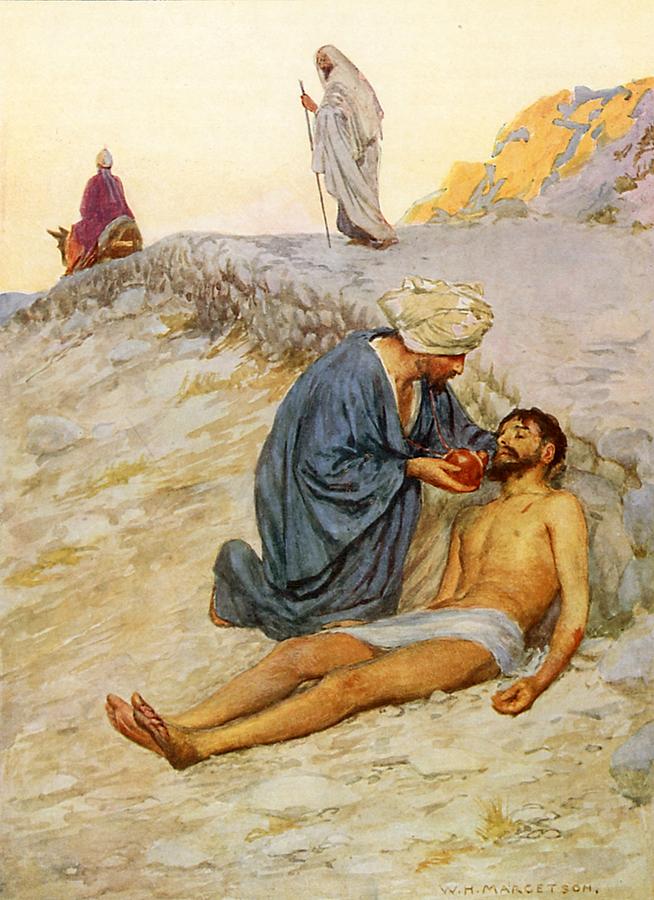
WHO WERE THE SAMARITANS?
“Samaritans figure prominently in the
New Testament. It is important to understand who they were and how they were
viewed and treated by the Jews. When the ten tribes were carried away captive,
the area of Samaria was repopulated by those living in neighboring areas. These
people worshiped idols but began to adopt Jewish practices and teachings into
their worship, and eventually they become more observant to the Mosaic law than
the Jews. When the Jews who had been carried away captive were eventually granted
permission from Cyrus, the Persian king, to return to Jerusalem (remember our lesson from last year about Ezra in the Old Testament!), the Samaritans
were eager to be recognized as Israelites and to be included in Jewish worship.
Yet the Jews viewed them as being a tainted race because of their intermarriage
with surrounding tribes.
“The Samaritans believed that they,
during the Jews’ exile, had preserved the true scriptures, the true priesthood
authority, and the true form of temple worship. They had built a Mount Gezim
and claimed that they, not the Jews, were legitimate heirs to the priesthood
because they were descendants of Ephraim and Manasseh.[1] These
differences resulted in animosity and violence between the two groups. The Jews
destroyed the Samaritan temple on Mount Gezim in 128 BC and reduced the
Samaritans’ land to a fraction of what it had been before. [3]
“By the time Christ came, tensions
between the Samaritans the Jews had eased, but the groups were still not friendly
with each other. The Samaritans, despite the ruined temple, still worshipped
and offered sacrifices on Mount Gezim and were contemptuous of the Jewish
temple in Jerusalem. James E. Talmage wrote that they “accused the Jews of
adding to the word of God, by receiving the writings of the prophets;… favored Herod
because the Jews hated him, and were loyal to him;… had kindled false lights on
the hills, to vitiate the Jewish reckoning by the new moons, and thus thrown
their feasts into confusion, and, in the early youth of Jesus, had even defiled
the very Temple itself by strewing human bones Passover.”[4] The Jews
weren’t much better. According to Talmage, the Jews also treated the Samaritans
poorly: “They had been subjected to every form of excommunication, by the
incommunicable name of Jehovah; by the Tables of the Law, and by the heavenly
and earthly synagogues. The very name [Samaritan] became a reproach.”[5] In their
courts, the Jews would not recognize the testimony of a Samaritan, nor would they
even touch or eat food that had been prepared by Samaritan hands.[6]”
“Walking
with the Women of the New Testament,” Heather Farrell, pp 165-167.
Comments
Post a Comment